Modern buildings rely on more than electrical power to operate safely, communicate effectively and provide a comfortable environment for occupants. From CCTV surveillance and access control to structured cabling, fiber-optic networks and smart automation, these technologies work together to create a connected, secure and efficient property. Collectively, they are known as Extra Low Voltage (ELV) systems.
For businesses, developers and property owners, understanding ELV systems in Qatar is essential when planning a new building, upgrading an existing facility or maintaining critical infrastructure. Choosing the right combination of technologies can improve security, streamline daily operations and support future expansion.
WeFour provides ELV solutions designed to support the communication, security and automation requirements of modern properties. Whether you are developing a commercial facility, managing an office or planning a residential project, working with an experienced ELV company in Qatar can help you identify suitable systems, coordinate installation and maintain reliable performance over time.
What Does ELV Stand For?
ELV stands for Extra Low Voltage. It refers to electrical and electronic systems that operate at relatively low voltages and are commonly used for communication, monitoring, security, audio-visual applications and building automation.
Unlike conventional power installations that supply electricity to lighting, air conditioning and heavy equipment, ELV infrastructure generally supports the technologies that help buildings communicate, monitor activity and manage access.
The exact voltage limits used to classify ELV depend on the applicable electrical standards and system type. In practice, the term is widely used in the construction and building-services industries to describe systems such as CCTV, data networking, intercoms, telephone systems and access control.
Why Are ELV Systems Important?
ELV systems help buildings function as integrated environments rather than collections of independent devices. Their benefits include:
- Improved security: CCTV cameras, access control and alarm integrations help protect people and property.
- Reliable communication: Structured cabling, fiber optics and PABX systems support voice and data connectivity.
- Greater efficiency: Smart automation can simplify the control of lighting, access and other compatible building functions.
- Better user experience: Public address and audio-visual systems improve communication and collaboration.
- Scalability: Properly designed infrastructure makes it easier to add devices, users and services as requirements change.
For projects in Qatar, ELV planning should account for the building’s intended use, environmental conditions, applicable local regulations and future operational needs.
Main ELV Systems Used in Qatar
ELV installations can combine several technologies, depending on the building’s size, purpose, security requirements and budget. Below are the core systems commonly used in residential, commercial and industrial projects.
1. CCTV Surveillance Systems
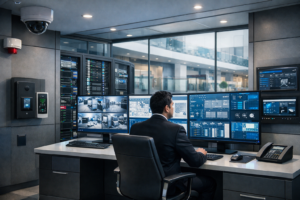
Closed-circuit television (CCTV) systems allow property owners and security teams to monitor selected areas using cameras and recording equipment. Modern solutions may include IP cameras, network video recorders, remote viewing, motion detection and video analytics.
CCTV can help monitor entrances, parking areas, reception desks, warehouses and other designated locations. The right camera selection depends on factors such as lighting, viewing distance, image quality and indoor or outdoor placement.
For projects in Qatar, camera installations should be designed according to the property’s security needs and any applicable Ministry of Interior requirements or other relevant regulations. Requirements may vary by property type and use, so they should be verified before installation.
Explore: CCTV and surveillance services
2. Structured Cabling and Networking
Structured cabling provides the physical infrastructure for data, voice and other compatible network services. It typically includes copper cabling, patch panels, network outlets, cabinets and cable-management components.
A well-planned cabling system helps offices, hotels, retail spaces and other facilities connect computers, wireless access points, printers, IP phones and network-enabled equipment.
Good design also makes troubleshooting easier and reduces the disruption associated with future changes. Cable categories, installation practices and network capacity should be selected according to the required performance and applicable standards.
Explore: Structured cabling and networking services
3. Fiber-Optic Cabling
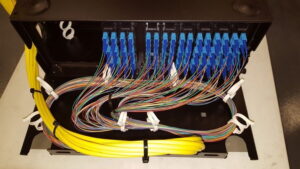
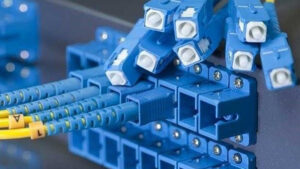
Fiber-optic cabling transmits data using light, making it suitable for high-bandwidth connections and links over longer distances. It is commonly used for connections between buildings, communication rooms, server rooms and network distribution points.
Fiber can offer high capacity and immunity to electromagnetic interference, although performance depends on the complete network design and equipment.
For larger developments and facilities with substantial connectivity requirements, fiber infrastructure can provide a strong foundation for future expansion.
Explore: Fiber-optic cabling services
4. Access Control Systems
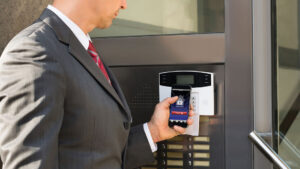
Access control systems manage who can enter specific rooms, buildings or restricted areas. Depending on the application, they may use access cards, PIN codes, biometric readers or mobile credentials.
These systems can help businesses control employee access, manage visitor entry and maintain event records. They can also integrate with CCTV, intercoms and other security technologies.
For example, an office may allow employees to enter general work areas while restricting access to server rooms or sensitive storage facilities. The system should be configured around the organisation’s access policies, privacy obligations and operational requirements.
Explore: Access control solutions
5. PABX and Business Telephone Systems
A Private Automatic Branch Exchange (PABX) manages telephone communications within an organisation and connects internal extensions to external telephone services.
Modern IP-based telephone systems can support call transfers, voicemail, call routing, conferencing and integration with compatible business communication platforms.
Hotels, offices, customer service centres and other organisations may use PABX systems to improve communication between departments and provide a more organised experience for callers.
The appropriate solution depends on the number of users, call volume, existing infrastructure and whether the organisation needs an on-premises or hosted system.
Explore: PABX and telephone system services
6. Public Address Systems
Public address (PA) systems distribute announcements, alerts and other audio messages through strategically placed speakers. They are commonly used in shopping centres, schools, offices, hotels, warehouses and public facilities.
A suitable PA design considers the size and layout of the premises, background noise, speaker placement and required sound coverage.
Some buildings may also require voice evacuation or emergency communication functionality. These applications involve additional design and compliance considerations and should not be treated as interchangeable with an ordinary background-music or announcement system.
Explore: Public address system services
7. Audio-Visual Systems
Audio-visual systems combine sound and visual technologies to support meetings, presentations, training, entertainment and digital communication.
Typical components include projectors, commercial displays, microphones, speakers, video-conferencing equipment, control panels and signal-distribution systems.
In corporate offices, integrated AV solutions can make meeting rooms easier to use. In hospitality and retail environments, they can support presentations, customer information and digital displays.
Successful installation depends on room acoustics, screen visibility, connectivity, equipment compatibility and straightforward operation.
Explore: Audio-visual solutions
8. Smart Home and Building Automation
Smart automation systems connect compatible devices so that selected building functions can be monitored or controlled through programmed schedules, sensors, control panels or mobile applications.
Depending on the project, automation may include lighting control, climate control, motorised curtains, selected security functions and centralised device management.
In villas, smart home systems can improve convenience and simplify the control of everyday functions. In commercial properties, building automation can help operators manage selected systems more consistently.
The available features depend on device compatibility, network design and the chosen automation platform. Energy savings are not automatic; they depend on configuration, usage and ongoing management.
Explore: Smart automation services
Where Are ELV Systems Used?
ELV technologies are relevant to almost every type of modern property. Their configuration varies according to the building’s purpose, size, occupancy and operational demands.
Villas and Residential Properties
Residential projects may combine CCTV, video intercoms, home networking, access control and smart automation. A well-designed installation helps residents manage security and everyday functions while providing sufficient connectivity for work, entertainment and connected devices.
The system should be selected according to the occupants’ needs, property layout and applicable requirements.
Residential and Commercial Towers
High-rise developments often need coordinated communication, security and access infrastructure. CCTV, access control, fiber backbones, structured cabling and public address systems may serve common areas, entrances, parking facilities and management offices.
Planning for equipment rooms, cable pathways and future maintenance is particularly important in larger buildings.
Shopping Malls and Retail Centres
Retail environments may use CCTV, network infrastructure, access control, public address and digital signage to support security, communication and daily operations.
Different areas may have different requirements, from customer-facing retail spaces to loading bays and restricted service corridors.
Offices and Corporate Buildings
Offices typically rely on structured cabling, wireless networking, PABX or IP telephony, access control, meeting-room AV and CCTV.
Integrating these systems around the organisation’s workflow can improve usability and make it easier for IT and facilities teams to manage the building.
Warehouses and Industrial Facilities
Warehouses may require surveillance across large areas, dependable network connectivity, controlled access and PA systems for operational announcements.
Outdoor exposure, dust, heat, cable-routing distances and the facility’s operating conditions should be considered when selecting equipment and designing the installation.
How to Choose an ELV Contractor in Qatar
Selecting the right ELV contractor is an important decision because the quality of design and installation can affect system reliability, maintenance costs and the ease of future upgrades.
Consider the following factors when evaluating an ELV company in Qatar.
1. Check Relevant Experience
Look for experience with projects similar to yours. A contractor familiar with villas may have different strengths from one specialising in commercial towers, industrial facilities or large retail developments.
Ask about comparable installations, project scope and the contractor’s role in design, supply, installation, testing and commissioning.
2. Review the Range of Services
A contractor offering multiple ELV solutions may be able to coordinate cabling, CCTV, access control, networking and automation under one project plan.
Review the company’s services page and confirm which services it delivers directly. If specialist subcontractors are involved, clarify their responsibilities and how integration will be managed.
3. Confirm Technical Capability
Ask whether the contractor can prepare suitable designs, equipment schedules, cable layouts, testing documentation and commissioning records.
Equipment should be selected based on actual project requirements rather than price alone. Compatibility between components is especially important when several systems must work together.
4. Understand Regulatory and Approval Requirements
Depending on the property and scope, an installation may need to meet applicable Qatar regulations, project specifications, building requirements or relevant authority approvals.
Ask the contractor to identify the approvals and compliance obligations applicable to your project. Do not assume that every building or residential CCTV installation follows identical requirements.
5. Compare Quotations Carefully
When comparing ELV contractors in Doha, look beyond the headline price. Check the equipment specifications, quantities, installation scope, testing, documentation, warranty terms and exclusions.
A detailed quotation makes it easier to compare proposals fairly and reduces the risk of unexpected costs during implementation.
6. Evaluate After-Sales Support
Ask about warranty handling, fault response times, spare-parts availability and ongoing maintenance options.
A contractor that can support the installed systems after handover can help reduce operational disruption and make future upgrades easier to manage.
Contact WeFour
📍 Office No. 5, Bank Street, West Bay, Doha, Qatar 📞 +97431464818 / +974 3013 6314 ✉️ info@wefourconnect.com 🌐 wefourconnect.com
Frequently Asked Questions
ELV systems in Qatar are low-voltage electronic installations used for security, communication, networking, audio-visual functions and building automation. Common examples include CCTV, structured cabling, fiber optics, access control, PABX, public address and smart home systems.
An ELV company may provide system design, equipment supply, installation, integration, testing, commissioning and maintenance. The exact scope varies by provider, so property owners should confirm which services are included in the quotation and handover.
Electrical systems typically distribute power to equipment such as lighting, sockets and air-conditioning units. ELV systems generally support functions such as communication, surveillance, access management and automation. Both need to be coordinated during building design and installation.
Costs depend on the building size, number of devices, equipment specifications, cabling requirements, installation complexity and integration needs. The best way to obtain an accurate estimate is to request a site assessment and an itemised quotation based on the required scope.
Requirements vary by building type, use, project specifications and applicable regulations. Some systems may be required for particular projects, while others are optional or selected to meet operational needs. Confirm the applicable requirements before finalising the design.