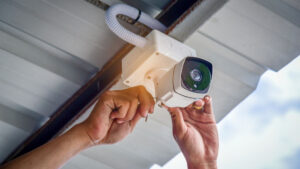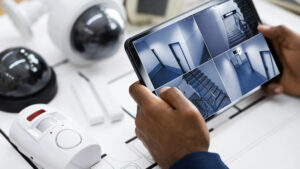
Choosing the best security camera systems for commercial buildings involves more than selecting cameras with high resolution. Businesses need reliable surveillance solutions that protect employees, visitors, assets, and property while supporting continuous monitoring and efficient security management. The right system depends on the building’s layout, security risks, operational requirements, and budget.
For businesses looking for reliable security solutions, WeFour provides professional CCTV installation and integrated security solutions in Qatar. From CCTV systems and structured cabling to access control and network infrastructure, WeFour helps businesses implement security technologies designed around their operational needs. A properly planned installation can improve surveillance coverage, strengthen security management, and support long-term system reliability.
Whether you manage an office building, warehouse, retail outlet, commercial complex, or multi-storey facility, investing in the right business security system can significantly improve safety and operational control.
Why Do Commercial Buildings Need Purpose-Built Security Camera Systems?
Commercial buildings have different security requirements from residential properties. Offices, warehouses, shopping centres, hotels, and industrial facilities often require extensive camera coverage, centralized monitoring, controlled access to recordings, and continuous operation.
A professional commercial CCTV system helps businesses:
- Monitor entrances, exits, corridors, and restricted areas.
- Deter unauthorized access, theft, and vandalism.
- Improve employee and visitor safety.
- Monitor deliveries, loading bays, and parking areas.
- Investigate security incidents using recorded footage.
- Manage surveillance across multiple locations.
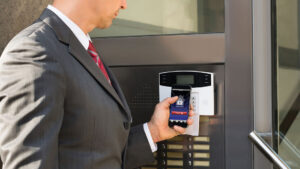
- Integrate video monitoring with access control and alarm systems.
Unlike basic home CCTV kits, commercial surveillance solutions are designed to accommodate larger installations, multiple users, and more demanding operational environments.
What Are the Main Types of Security Camera Systems for Commercial Buildings?
Choosing the right CCTV technology is an important part of designing an effective business security system. The following are the most common options.
1. IP Camera Systems – Best Overall for Most Businesses
Internet Protocol (IP) cameras transmit digital video over a network. They are widely used in modern commercial installations because they offer flexibility, scalability, and advanced monitoring features.
Key advantages include:
- High-resolution recording, commonly available in 4MP, 8MP, and higher resolutions.
- Power over Ethernet (PoE), allowing power and data transmission through one cable.
- Remote monitoring through mobile devices and computers.
- Integration with video management software (VMS).
- Advanced analytics, including motion detection and intrusion alerts.
- Easier expansion when additional cameras are required.
IP camera systems are particularly suitable for offices, commercial towers, warehouses, retail businesses, and large facilities.
However, they require proper network planning, sufficient bandwidth, secure configurations, and reliable recording infrastructure.
2. Analog and HD-over-Coax CCTV Systems
Traditional analog CCTV systems remain useful for businesses with existing coaxial cabling.
Modern HD-over-Coax technologies, including HD-TVI, AHD, and HD-CVI, provide improved image quality compared with older analog systems.
Advantages include:
- Lower upgrade costs when existing coaxial infrastructure is reusable.
- Straightforward installation in suitable legacy environments.
- Compatibility with appropriate hybrid or analog DVR equipment.
- A practical option for smaller businesses with limited budgets.
The main limitation is that analog systems generally offer less flexibility and fewer advanced networking capabilities than modern IP solutions.
3. Hybrid CCTV Systems
Hybrid CCTV systems combine analog and IP cameras through compatible recording equipment.
They are particularly useful for commercial buildings that want to upgrade surveillance gradually without replacing every existing camera and cable.
Benefits include:
- Support for suitable legacy cameras.
- Gradual migration to IP technology.
- Reduced initial infrastructure replacement costs.
- Greater flexibility during phased upgrades.
4. Cloud-Based and Hybrid-Cloud CCTV Systems
Cloud-managed surveillance systems allow businesses to access and manage video footage through internet-connected platforms.
These solutions can be particularly useful for companies operating multiple branches or commercial properties.
Key benefits include:
- Centralized remote monitoring.
- Easier management across multiple locations.
- Reduced dependence on local recording hardware in some configurations.
- Flexible storage and management options.
Before choosing a cloud-based system, consider subscription costs, internet bandwidth, data protection, cybersecurity, and where video recordings will be stored.
5. Wireless Security Camera Systems
Wireless cameras transmit video over wireless networks and can be useful in locations where installing cables is difficult.
They are suitable for temporary installations, selected remote areas, and locations with limited cabling access.
However, commercial buildings generally benefit from wired PoE cameras for critical surveillance because they provide more predictable connectivity and power arrangements.
What Features Should You Look for in Commercial Security Cameras?
The best commercial security camera system should combine image quality, reliable recording, intelligent monitoring, and strong cybersecurity.
Consider these essential features before selecting a system.
1. High Resolution and Image Quality
Camera resolution determines how much visual detail a recording can capture.
For commercial applications, 4MP and 8MP cameras are common options. However, the appropriate resolution depends on the camera’s viewing angle, distance from the subject, lighting, and identification requirements.
2. Night Vision and Low-Light Performance
Entrances, parking areas, loading bays, and building perimeters require reliable monitoring after dark.
Look for cameras with infrared (IR) illumination, low-light sensors, or suitable color night-vision capabilities.
3. Wide Dynamic Range (WDR)
WDR technology helps cameras capture clearer images in challenging lighting conditions.
It is especially useful in reception areas, glass-fronted buildings, entrances, and locations with strong sunlight or backlighting.
4. Weatherproof and Vandal-Resistant Design
Outdoor commercial cameras must withstand environmental conditions.
Consider:
- IP66 or IP67 weatherproof ratings.
- IK10 impact-resistance ratings where vandal resistance is required.
- Suitable operating temperature ranges.
- Protection against dust, moisture, and corrosion.
These specifications are particularly important for outdoor CCTV installation in Qatar, where heat, humidity, and dust can affect equipment performance.
5. Smart Video Analytics
Modern commercial CCTV systems can offer intelligent monitoring features, including:
- Motion detection.
- Intrusion detection.
- Line-crossing alerts.
- Loitering detection.
- People counting.
- License plate recognition.
These features can help security teams identify unusual activity and reduce the time spent manually monitoring camera feeds.
6. Storage Capacity and Video Retention
A commercial CCTV system needs sufficient storage to retain recordings for the required period.
Storage planning should consider:
- Number of cameras.
- Video resolution.
- Frame rate.
- Recording schedules.
- Compression technology, such as H.265.
- Required retention period.
- Redundancy and backup arrangements.
7. Cybersecurity and Remote Access
Network-connected cameras must be protected against unauthorized access.
Look for systems that support encrypted communication, secure user authentication, regular firmware updates, strong passwords, and network segmentation.
8. Integration with Other Security Systems
For larger facilities, CCTV should work alongside other security technologies.
Consider compatibility with:
- Access control systems.
- Intrusion alarms.
- Visitor management systems.
- Building management platforms.
- Video management software (VMS).
Integrated systems can make security monitoring more efficient and centralized.
Which Security Camera Types Are Best for Different Commercial Areas?
Different areas of a commercial building require different camera designs and viewing capabilities.
| Commercial Area | Recommended Camera Type |
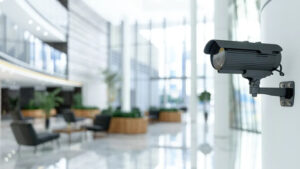
| Lobbies and reception areas | Dome or turret cameras with WDR |
| Offices and corridors | Discreet dome or turret cameras |
| Parking areas | Bullet cameras or PTZ cameras |
| Building perimeters | Weatherproof bullet cameras |
| Large warehouses | Wide-angle or multi-sensor cameras |
| Main entrances | High-resolution cameras with WDR |
| Server rooms | Fixed high-resolution cameras |
| Loading bays | Outdoor bullet cameras with night vision |
| Large outdoor spaces | PTZ cameras with suitable analytics |
A professional site survey helps determine camera placement, viewing angles, mounting heights, and potential blind spots.
What Are the Best Security Camera Brands for Commercial Buildings?
Several established manufacturers offer commercial-grade CCTV cameras, recording equipment, and video management solutions.
Popular manufacturers include:
- Axis Communications: Known for professional IP cameras, network video solutions, and intelligent analytics.
- Hanwha Vision: Offers commercial surveillance cameras and integrated video security technologies.
- Bosch: Provides professional video surveillance and integrated security solutions.
- Hikvision: Offers a broad range of IP cameras, recorders, and video surveillance technologies.
- Dahua Technology: Provides CCTV cameras, NVRs, and intelligent video monitoring solutions.
- Uniview: Offers network cameras and recording systems for commercial applications.
Popular video management platforms include Milestone Systems and Genetec.
The best manufacturer depends on your project requirements, budget, compatibility needs, cybersecurity policies, and local regulatory considerations. Always confirm that the proposed equipment is approved for the intended application in Qatar.
Security Camera Installation in Qatar: What Businesses Should Consider
Commercial CCTV installation in Qatar requires careful planning. In addition to selecting suitable equipment, businesses should consider environmental conditions, regulatory requirements, network infrastructure, and professional installation.
1. Qatar’s Climate and Environmental Conditions
High temperatures, humidity, and dust can affect the performance and lifespan of surveillance equipment.
For outdoor installations, select cameras with suitable environmental protection, wide operating temperature ranges, and appropriate weather-resistant enclosures.
2. Qatar CCTV Regulations and MOI Requirements
Businesses planning CCTV installation in Qatar should understand the applicable requirements of the Ministry of Interior (MOI).
Qatar’s Law No. 9 of 2011 regulates the use of security surveillance cameras and devices. It applies to specified facilities and other categories designated under the relevant regulatory framework.
Depending on the facility and applicable requirements, businesses may need to consider:
- Approved camera specifications and installation locations.
- Relevant system licensing and conformity requirements.
- Required surveillance signage.
- Recording retention requirements.
- Control room and operational requirements.
- Restrictions on camera placement in designated private areas.
For facilities covered by Article 6 of the law, recordings must generally be retained for 120 days. Businesses should confirm the specific requirements applicable to their premises with the MOI Security Systems Department or an appropriately licensed security systems provider.
Businesses should also consider Qatar’s Personal Data Privacy Protection Law No. 13 of 2016 when collecting, accessing, storing, and managing footage containing identifiable individuals.
3. Choose an Experienced and Approved CCTV Installer
Selecting the right installation provider is as important as selecting the camera hardware.
Work with a qualified local security systems integrator who understands applicable MOI requirements and can assist with system design, equipment selection, installation, approvals, testing, and maintenance.
4. Plan Network Infrastructure and Backup Power
IP CCTV systems require reliable network infrastructure.
A professional installation should consider:
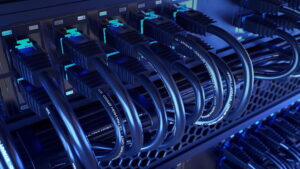
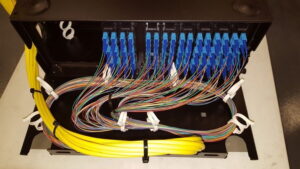
- Structured cabling.
- Suitable PoE switches.
- Network bandwidth requirements.
- Secure VLAN configuration.
- Uninterruptible power supply (UPS).
- Backup recording and storage arrangements.
These measures help maintain surveillance operations during network or power interruptions.
How to Choose the Right Commercial CCTV Installation Provider
Before hiring a CCTV installation company, evaluate its technical capabilities and after-sales support.
Here are some important questions to ask:
- Does the provider conduct a detailed site survey?
- Can they prepare a camera placement and coverage plan?
- Do they understand applicable Qatar MOI requirements?
- Can they supply equipment suitable for the building’s environment?
- Do they provide installation, testing, and commissioning?
- What warranty and maintenance services are available?
- Can the system support future expansion?
- Who manages the recording system, administrator accounts, and data access?
Request sample footage, especially from low-light and challenging lighting conditions, before approving the final proposal.
Common Mistakes to Avoid When Installing Commercial Security Cameras
Even high-quality cameras may fail to deliver effective security if the system is poorly designed.
Avoid these common mistakes:
- Choosing cameras based only on megapixels: Lens quality, lighting, viewing angles, and camera placement also matter.
- Underestimating storage requirements: Insufficient storage can prevent businesses from retaining footage for the required period.
- Ignoring cybersecurity: Default passwords and outdated firmware can expose surveillance systems to unauthorized access.
- Overlooking blind spots: Poor camera positioning can leave entrances, corridors, and perimeter areas unmonitored.
- Using unsuitable outdoor cameras: Equipment must be selected according to environmental and installation conditions.
- Skipping regular maintenance: Dirty lenses, damaged cables, and recording failures can reduce system effectiveness.
- Ignoring future expansion: A scalable system helps businesses accommodate additional cameras and facilities.
Why Choose WeFour for Commercial CCTV and Security Solutions in Qatar?
Selecting a reliable technology partner can make a significant difference in the performance of a commercial surveillance system.
WeFour provides CCTV installation and integrated technology solutions for businesses and properties in Qatar. Its service offerings include CCTV installation, structured cabling, fiber optic networking, access control, and other ELV solutions.
Businesses can benefit from a coordinated approach to surveillance and network infrastructure, helping ensure that different security components work effectively together.
When planning a commercial CCTV project, discuss your building layout, monitoring requirements, equipment preferences, and applicable regulatory requirements with the installation team.
Explore WeFour’s CCTV installation solutions: https://wefourconnect.com/cctv-installation-in-qatar/