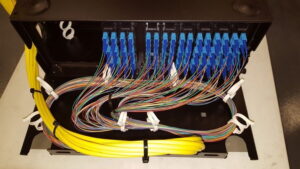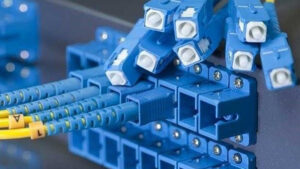
Every email, video conference, cloud application, and security camera in a modern office depends on reliable network infrastructure. For businesses in Qatar, investing in professional structured cabling is essential for maintaining stable connectivity, supporting business operations, and preparing for future technology requirements. A properly designed cabling system reduces network disruptions, simplifies maintenance, and provides a scalable foundation for business growth.
WeFour provides structured cabling and network infrastructure solutions in Qatar, helping businesses establish reliable connectivity for offices, commercial buildings, and large facilities. From Cat6 and Cat6A data cabling to fiber optic installations, WeFour supports businesses with infrastructure designed to accommodate modern networking, communication, and security requirements.
Whether you are setting up a new office, upgrading an existing network, or developing a commercial property, understanding the benefits of structured cabling can help you make a smarter long-term investment.
What Is a Structured Cabling System?
A structured cabling system is an organized network infrastructure consisting of cables, connectors, patch panels, racks, and other components that support voice, data, video, and building communication systems.
Instead of installing separate cables for individual devices, structured cabling follows a standardized architecture that connects different areas of a building through a coordinated network.
A typical structured cabling system includes six main subsystems:
- Entrance Facility: The point where external telecommunications services enter the building.
- Equipment Room: The central location for network switches, servers, and main distribution equipment.
- Backbone Cabling: Connects equipment rooms and telecommunications rooms, commonly using fiber optic cables.
- Horizontal Cabling: Connects telecommunications rooms to individual work areas, generally using Cat6 or Cat6A copper cables.
- Telecommunications Room: Houses network distribution equipment, patch panels, and floor-level connections.
- Work Area Components: Includes wall outlets, connectors, and patch cords used to connect computers, phones, and other devices.
Structured cabling follows recognized standards such as ANSI/TIA and ISO/IEC, helping ensure compatibility, consistent performance, and easier network management.
What Are the Key Benefits of Structured Cabling for Businesses in Qatar?
Structured cabling offers several advantages for businesses of different sizes and industries. Here are the most important benefits.
1. Reliable and Consistent Network Performance
A properly installed structured cabling system provides a dependable foundation for business connectivity.
Poorly organized or low-quality cabling can lead to signal degradation, connectivity interruptions, and network performance issues.
Professional network cabling solutions use quality components, appropriate installation practices, and certification testing to support reliable connectivity for:
- Cloud-based applications.
- Video conferencing and VoIP communication.
- Enterprise resource planning (ERP) systems.
- Business computers and servers.
- Wireless access points.
- IP surveillance systems.
For businesses where network downtime affects productivity and revenue, reliable cabling infrastructure is particularly important.
2. Easy Scalability for Business Growth
Businesses frequently expand their offices, add employees, introduce new technologies, and reorganize workspaces.
Structured cabling makes these changes easier because connections are organized through centralized distribution points and patch panels.
Instead of installing entirely new cable routes whenever a business expands, technicians can often establish additional connections through the existing infrastructure.
A scalable cabling system also allows businesses to plan for:
- Additional workstations.
- More Wi-Fi access points.
- New CCTV cameras.
- Access control systems.
- Additional servers and network equipment.
- Higher network bandwidth requirements.
Installing suitable cable categories and spare pathway capacity during the initial project can reduce future upgrade expenses.
3. Lower Long-Term Infrastructure Costs
Although structured cabling may require a higher initial investment than unplanned cabling, it can reduce operational expenses over time.
Its long-term cost benefits include:
- Less troubleshooting and maintenance work.
- Reduced network downtime.
- Lower expenses during office expansion.
- Easier replacement and upgrades.
- Better utilization of network infrastructure.
- Reduced need for repeated cable installation.
A well-designed structured cabling system can often support multiple generations of network equipment over its useful service life, provided the cabling category and installation specifications meet the required performance standards.
4. Easier Network Management and Troubleshooting
Organized cabling makes it easier for IT teams and technicians to identify and resolve network issues.
A structured installation uses labeled cables, patch panels, rack layouts, and documented connection points.
These practices help technicians:
- Trace network connections quickly.
- Identify faulty cables and ports.
- Manage network changes efficiently.
- Reduce troubleshooting time.
- Maintain accurate infrastructure records.
Clear documentation is especially useful for large commercial buildings where multiple IT teams or service providers may manage the network.
5. Supports Multiple Business Technologies
One of the biggest advantages of structured cabling is its ability to support different communication and building technologies through a unified infrastructure.
A properly designed network can support:
- Desktop computers and printers.
- IP telephones and VoIP systems.
- Wi-Fi access points.
- IP CCTV cameras.
- Access control systems.
- Video conferencing equipment.
- Digital signage.
- Building management systems.
- Smart office and IoT devices.
Power over Ethernet (PoE) further simplifies installation by allowing compatible devices, such as cameras, wireless access points, and IP phones, to receive power and data through a single Ethernet cable.
6. Cleaner, Safer, and More Organized Installations
Unorganized cables can create maintenance difficulties, obstruct airflow, and increase the risk of accidental damage.
Structured cabling uses organized pathways, cable trays, conduits, racks, and patch panels to maintain a clean installation.
Benefits include:
- Improved cable organization.
- Better equipment accessibility.
- Reduced cable congestion.
- Improved airflow in network racks.
- Easier maintenance and inspection.
- Reduced risk of accidental cable damage.
In Qatar’s hot climate, proper equipment-room ventilation and organized rack layouts are particularly important for maintaining suitable operating conditions.
7. Improved Network Security and Access Management
Structured cabling supports better physical management of network infrastructure.
When network connections are centralized and documented, businesses can control access to telecommunications rooms, equipment racks, and patch panels.
Additional security measures can include:
- Restricted access to network rooms.
- Secure equipment racks.
- Controlled patch panel access.
- Network segmentation.
- Port-level access controls.
- Regular infrastructure audits.
These measures are particularly valuable for businesses operating in finance, healthcare, government-related services, and other environments with strict information security requirements.
8. Future-Ready Infrastructure for Modern Technologies
Technology requirements continue to evolve, and businesses need network infrastructure that can support increasing bandwidth demands.
Structured cabling provides the foundation for modern technologies such as:
- Wi-Fi 6, Wi-Fi 6E, and Wi-Fi 7.
- 10 Gigabit Ethernet networking.
- Cloud computing.
- Internet of Things (IoT).
- Smart building automation.
- High-resolution IP surveillance.
- Advanced video conferencing.
- Data centre connectivity.
Choosing suitable cabling specifications during installation helps businesses avoid unnecessary infrastructure replacement when upgrading their technology.
Copper vs. Fiber Optic Cabling: Which Is Better for Your Business?
Both copper and fiber optic cables play important roles in commercial network infrastructure. The right choice depends on transmission distance, bandwidth requirements, equipment compatibility, and installation costs.
| Feature | Copper (Cat6/Cat6A) | Fiber Optic |
| Main application | Workstations and end devices | Network backbone and long-distance links |
| Typical Ethernet distance | Up to 100 metres | Depends on fiber type and transceivers |
| Speed capability | Up to 10 Gbps, depending on category and distance | 10 Gbps, 40 Gbps, 100 Gbps and beyond, depending on equipment |
| Electrical interference | Susceptible to electromagnetic interference | Immune to electromagnetic interference |
| Power delivery | Supports PoE with compatible equipment | Does not carry conventional PoE |
| Installation cost | Generally lower | Can be higher depending on equipment and termination |
| Best use | Horizontal office cabling | Backbone and high-bandwidth connectivity |
When Should You Choose Cat6 or Cat6A?
Cat6 and Cat6A copper cabling are suitable for connecting office computers, printers, IP phones, wireless access points, and other network devices.
Cat6A is particularly useful for new commercial installations requiring 10 Gigabit Ethernet over the full 100-metre channel.
When Should You Choose Fiber Optic Cabling?
Fiber optic cabling is ideal for connecting different floors, telecommunications rooms, server rooms, and separate buildings.
It offers high bandwidth capacity, long transmission distances, and immunity to electromagnetic interference.
What Is the Best Solution?
For most commercial buildings, a hybrid structured cabling system is a practical choice.
It combines fiber optic backbone connections with Cat6 or Cat6A horizontal cabling to deliver reliable and scalable network connectivity.
Structured Cabling Considerations for Businesses in Qatar
Businesses planning structured cabling installation in Qatar should consider several local environmental and infrastructure requirements.
1. Climate and Environmental Conditions
Qatar experiences high temperatures, humidity, and dusty conditions, which can affect cabling materials and network equipment.
Choose suitable cable jackets, enclosures, conduits, and installation accessories for outdoor areas, rooftops, parking facilities, and industrial environments.
2. Fire Safety Requirements
Fire safety is an important consideration for commercial cabling installations.
Depending on the building type and installation environment, businesses may need cables with suitable fire-performance classifications, including LSZH (Low Smoke Zero Halogen).
Always confirm the applicable Qatar Civil Defence, building, and project specifications before selecting cable types.
3. Large and Complex Commercial Facilities
Shopping malls, office towers, hospitals, hotels, industrial facilities, and university campuses require carefully planned network infrastructure.
These projects may need:
- Multiple telecommunications rooms.
- Fiber optic backbone connections.
- Redundant network pathways.
- High-density cable trays.
- Dedicated equipment rooms.
- Future expansion capacity.
4. Regulations, Standards, and Approvals
Structured cabling projects should follow applicable telecommunications standards, building requirements, and project specifications.
Businesses should confirm relevant requirements with building management, the project’s consultants, telecommunications providers, and applicable authorities before installation.
5. Power Backup and Equipment-Room Cooling
Network switches, servers, and other active equipment require reliable power and suitable operating temperatures.
Consider installing UPS systems, appropriate cooling, and environmental monitoring in server rooms and telecommunications rooms.
These measures help protect critical network equipment and maintain business connectivity during power interruptions.
What Should You Look for in Structured Cabling Companies in Qatar?
Choosing the right structured cabling company is essential for ensuring long-term network performance.
Before selecting a provider, evaluate the following factors.
1. Relevant Project Experience
Look for a company with experience in commercial offices, residential towers, industrial facilities, healthcare buildings, or projects similar to yours.
2. Standards Compliance
The installation should follow applicable ANSI/TIA and ISO/IEC structured cabling standards, together with project specifications and local requirements.
3. Certified Installation and Testing
A professional provider should use suitable testing equipment to verify installed cabling links.
Request certification reports for all required links rather than relying only on visual inspections or basic connectivity checks.
4. Manufacturer Warranty
Ask whether the provider is an authorized or certified installation partner for the proposed cabling manufacturer.
Some manufacturers offer extended system warranties when their specified components are installed and certified through approved programs.
5. Complete Project Documentation
A professional handover should include:
- As-built drawings.
- Cable identification and labeling records.
- Rack and patch panel layouts.
- Cable certification reports.
- Network connection documentation.
- Warranty information.
6. Maintenance and After-Sales Support
Choose a company that can assist with troubleshooting, maintenance, network expansion, and future infrastructure upgrades.
7. Transparent Pricing
A detailed quotation should identify cable categories, brands, quantities, installation scope, testing requirements, accessories, and exclusions.
This makes it easier to compare proposals and avoid unexpected expenses.
What Are the Best Practices for Data Cabling Installation?
A professional data cabling installation requires proper planning, quality materials, and careful execution.
The following practices help ensure reliable results:
- Conduct a site survey: Assess the building layout, network requirements, and available cable pathways.
- Prepare a structured design: Plan equipment rooms, racks, backbone connections, and horizontal cable routes.
- Separate power and data cables: Follow applicable separation requirements to minimize electromagnetic interference.
- Maintain correct bend radius: Avoid excessive bending or pulling tension that could damage cables.
- Label every cable: Use consistent identification at both ends.
- Install suitable racks and patch panels: Keep network connections organized and accessible.
- Test and certify all links: Use Fluke or equivalent cable certification equipment appropriate to the required standard.
- Maintain spare capacity: Allow additional space in conduits, trays, racks, and distribution panels.
- Provide complete documentation: Record cable routes, connection details, and certification results.
Common Structured Cabling Mistakes Businesses Should Avoid
Even a well-funded network project can experience problems if the installation is poorly planned.
Avoid these common mistakes:
- Selecting the cheapest cables without checking performance specifications.
- Using outdated cable categories for new installations.
- Ignoring future bandwidth and expansion requirements.
- Skipping cable certification testing.
- Failing to label and document connections.
- Overfilling cable trays and conduits.
- Installing unsuitable cables in outdoor environments.
- Ignoring rack ventilation and cable management.
- Failing to plan sufficient fiber optic backbone capacity.
Avoiding these issues can improve network reliability and reduce long-term maintenance costs.
Why Choose WeFour for Structured Cabling Solutions in Qatar?
A reliable network starts with the right infrastructure partner.
WeFour offers structured cabling and network infrastructure services for businesses in Qatar, supporting the connectivity requirements of modern offices and commercial facilities.
Its technology solutions include structured data cabling, fiber optic networking, CCTV installation, and other ELV and network infrastructure services.
By coordinating cabling and related technology installations, businesses can establish a more organized infrastructure that supports communication, security, and future expansion.
Whether you are planning a new office network, upgrading existing data cabling, or developing a large commercial facility, discuss your project requirements with WeFour.
Explore WeFour’s structured cabling solutions: https://wefourconnect.com/structured-cabling-in-qatar/