Fiber optic cabling is important for modern businesses because it provides high-speed, reliable, and scalable network connectivity for growing digital operations. Unlike traditional copper cabling, fiber uses light to transmit data, allowing it to support high bandwidth, longer distances, and resistance to electromagnetic interference. For businesses in Qatar, fiber optic cabling can provide a strong network backbone for offices, commercial buildings, warehouses, data centers, CCTV, access control, Wi-Fi, cloud applications, and other business systems.
If you’re planning a new office network or upgrading your existing cabling, it’s important to have the project properly planned and installed by experienced professionals. The right cable type, network layout, equipment, cable routes, testing, and documentation all need to be considered before installation. If you’re not sure what your business needs, you can always contact WeFour, a fiber optic cabling and structured cabling solutions provider in Qatar, for professional guidance and installation. The following guide explains what fiber optic cabling is, why it matters for modern businesses, how it compares with copper cabling, and what you should consider when planning a reliable business network.
What Is Fiber Optic Cabling?
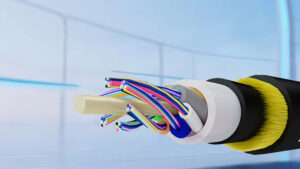
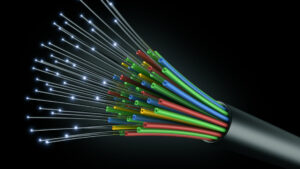
Fiber optic cabling is a type of network cabling that transmits data using pulses of light through optical fibers instead of electrical signals.
Unlike traditional copper Ethernet cables such as Cat5e, Cat6, and Cat6A, fiber optic cables can provide high bandwidth over longer distances and are not affected by electromagnetic interference in the same way as copper cables.
Fiber optic cabling can be used for:
- Network backbone connections
- Server rooms
- Data centers
- Connections between floors
- Connections between network cabinets
- Connections between buildings
- High-bandwidth network infrastructure
- Long-distance communication links
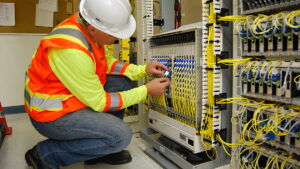
For modern businesses, fiber can provide the backbone needed to connect different parts of a network reliably.
Why Does Fiber Optic Cabling Matter for Modern Businesses?
Modern businesses rely on their network infrastructure for almost every part of daily operations.
Employees may depend on:
- Cloud applications
- Video conferencing
- VoIP phone systems
- File sharing
- Online business platforms
- CCTV systems
- Access control
- Servers
- Wi-Fi networks
- Data-heavy applications
As the number of connected devices and the amount of data increase, the network infrastructure needs to keep up.
Here are some of the main reasons businesses consider fiber optic cabling.
1. It Supports Higher Bandwidth Requirements
Businesses are using more data-intensive applications than ever before.
Cloud platforms, video conferencing, large file transfers, AI tools, digital systems, and connected devices can all increase network traffic.
A properly designed fiber optic network can provide the bandwidth required for high-performance business environments.
This can be especially useful for companies with:
- Large numbers of employees
- Multiple departments
- Large file transfers
- Cloud-based applications
- Video conferencing
- Servers and storage systems
- Multiple network cabinets
- High-speed internet connections
The exact performance depends on the fiber type, network equipment, transceivers, and overall network design.
2. It Provides Reliable Network Connectivity
Network reliability is important for businesses.
A network interruption can affect communication, cloud applications, CCTV, access control, and other systems.
Fiber optic cabling uses light instead of electrical signals, making it resistant to electromagnetic interference.
This can be particularly useful in environments where network cables may be installed near electrical equipment, machinery, or other sources of interference.
A properly installed and tested fiber network can therefore provide a reliable foundation for business connectivity.
3. It Supports Longer Distances
One of the major advantages of fiber optic cabling is its ability to support longer network connections than standard copper Ethernet cabling.
Copper Ethernet connections are commonly limited to around 100 meters for standard channel designs, depending on the specific standard and installation.
Fiber can support much longer distances, depending on the type of fiber and network equipment being used.
This makes fiber useful for connecting:
- Different floors
- Large office areas
- Server rooms
- Separate equipment rooms
- Multiple buildings
- Large commercial facilities
For larger buildings, fiber can reduce the need for additional network equipment required to extend copper connections over long distances.
4. It Helps Future-Proof Your Network
Replacing network cabling after an office has been fully constructed can be expensive and disruptive.
Cables may run through:
- Ceilings
- Walls
- Cable trays
- Conduits
- Raised floors
- Server rooms
Installing an appropriate backbone infrastructure during the initial construction or renovation can make future upgrades easier.
Fiber optic cabling can provide additional capacity for future network upgrades, depending on the fiber type and equipment used.
This makes it an attractive option for businesses planning to expand their network over time.
5. It Supports Multi-Floor and Multi-Building Networks
Businesses operating across multiple floors or buildings often need a reliable backbone connection.
For example, an office may have:
- A server room on one floor
- Network cabinets on several floors
- Wi-Fi access points throughout the building
- CCTV cameras
- Access control systems
- Meeting rooms
- Multiple departments
Fiber optic cabling can connect the main network equipment to these different areas.
For businesses operating multiple buildings, fiber can also provide a practical high-capacity backbone between locations where the physical network design allows it.
6. It Supports Modern Business Systems
Fiber optic cabling does not directly connect every office device.
Instead, it is often used as the backbone of the network.
The backbone can support systems such as:
- Wi-Fi infrastructure
- CCTV
- Access control
- IP phones
- Servers
- Network storage
- Cloud connectivity
- Digital signage
- Smart building systems
This allows different systems to operate on a properly planned network infrastructure.
7. It Works Well With Cloud and VoIP-Based Businesses
Many businesses now rely heavily on cloud-based applications and internet-based communication.
Employees may use cloud software throughout the working day while simultaneously participating in video meetings, accessing files, making VoIP calls, and using other online services.
A well-designed network backbone can help provide the capacity and reliability required for these applications.
However, fiber cabling alone does not guarantee faster internet. Network switches, routers, internet bandwidth, server performance, configuration, and other infrastructure also affect overall network performance.
Fiber Optic vs Copper Cabling: Which Is Better?
Fiber and copper both have important roles in modern network infrastructure.
The right choice depends on where the cable will be used.
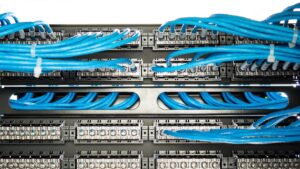
Copper Cabling Cat6 and Cat6A copper cabling are commonly used for:
- Desktop computers
- Printers
- IP phones
- Wi-Fi access points
- CCTV cameras
- Short-distance network connections
- Other local network devices
Copper is practical for connecting individual devices within an office.
Fiber Optic Cabling Fiber is commonly used for:
- Network backbones
- Server rooms
- Connections between floors
- Equipment room connections
- Connections between buildings
- Longer-distance network links
- High-bandwidth infrastructure
Fiber can provide longer transmission distances and high bandwidth while remaining resistant to electromagnetic interference.
Should You Replace All Copper With Fiber? Not necessarily.
A modern business network often uses a combination of both.
For example: Fiber optic cabling → Network backbone Cat6/Cat6A → Desks and local devices
This hybrid approach can provide the advantages of fiber where they are most valuable while keeping copper connections practical for individual devices.
What Type of Fiber Optic Cabling Should You Use?
There are different types of fiber optic cabling, and the appropriate option depends on the distance, network equipment, bandwidth requirements, and building design.
Two commonly discussed categories are:
Single-Mode Fiber Single-mode fiber is designed for long-distance communication and is commonly used where network connections need to travel significant distances.
It can be suitable for:
- Long-distance links
- Campus networks
- Connections between buildings
- Telecom infrastructure
- Large network environments
Multimode Fiber Multimode fiber is commonly used for shorter-distance high-speed connections within buildings and data centers.
It can be suitable for:
- Server rooms
- Data centers
- Equipment rooms
- Building backbones
- Shorter high-speed network connections
The correct fiber type should be selected based on the required distance, network speed, equipment compatibility, and future expansion plans.
Signs Your Business May Need a Fiber Optic Upgrade
Your existing network infrastructure may need assessment if you are experiencing:
- Network slowdowns during busy periods
- Problems connecting different floors
- Difficulty connecting multiple buildings
- Increasing numbers of network devices
- Heavy use of cloud applications
- Frequent video conferencing
- High-bandwidth data transfers
- Plans to expand your office
- Aging network infrastructure
- Increasing dependence on CCTV, access control, and smart systems
These signs do not automatically mean that fiber is the solution. A professional network assessment can help identify whether the issue is related to cabling, network equipment, internet bandwidth, configuration, or another part of the infrastructure.
What Should You Consider Before Installing Fiber Optic Cabling?
Before installation, businesses should consider:
Network Requirements Understand the current and expected bandwidth requirements.
Building Layout Consider the location of server rooms, network cabinets, floors, equipment rooms, and buildings.
Cable Routes Plan appropriate routes through cable trays, conduits, ceilings, or other suitable infrastructure.
Fiber Type Choose between appropriate fiber options based on distance and network requirements.
Network Equipment Make sure switches, transceivers, patch panels, and other equipment are compatible with the selected fiber.
Future Expansion Consider how many additional connections and higher speeds the business may need later.
Testing and Documentation Every installed fiber link should be properly tested and documented so future troubleshooting and maintenance are easier.
Need Professional Fiber Optic Cabling in Qatar?
Planning a new office network or upgrading your existing infrastructure?
You can use the information above to understand the basics of fiber optic cabling. If you’re unsure about fiber selection, backbone design, cable routes, network equipment, testing, or installation, you can always contact WeFour for professional fiber optic cabling and structured cabling solutions in Qatar.
WeFour helps businesses plan and install fiber networking, structured cabling, CCTV, access control, PABX, and other ELV infrastructure for offices and commercial spaces across Qatar.
Contact WeFour
📍 Office No. 5, Bank Street, West Bay, Doha, Qatar 📞 +97431464818 / +974 3013 6314 ✉️ info@wefourconnect.com 🌐 wefourconnect.com
Reach out by phone, email, or through the website to discuss your fiber optic cabling requirements and arrange a professional network assessment.
Frequently Asked Questions
Neither is automatically better for every application. Fiber is generally more suitable for high-bandwidth backbone and longer-distance connections, while Cat6 or Cat6A is practical for many individual office devices and shorter connections.
Not always. Small businesses may not need fiber to every workstation. However, a fiber backbone can be useful if the business has multiple floors, high bandwidth requirements, long cable distances, or plans for future expansion.
Yes. Fiber can be integrated with an existing network using compatible switches, fiber transceivers, patch panels, and other network equipment. Many businesses use fiber for the backbone while continuing to use Cat6 or Cat6A for local device connections.
Properly installed fiber optic cabling can provide long-term network infrastructure. Its useful lifespan depends on physical condition, installation quality, network requirements, equipment compatibility, and future technology requirements.
Yes. Fiber can be used as part of the backbone infrastructure for IP CCTV systems, especially across long distances, multiple floors, or multiple buildings. Cameras themselves are commonly connected locally using copper Ethernet and PoE.
Yes. Fiber can connect network switches and Wi-Fi infrastructure through the network backbone. Individual Wi-Fi access points are commonly connected using copper Ethernet, often with PoE for power.