Choosing a CCTV installation company in Qatar should involve more than comparing camera prices. A reliable provider should understand your property’s security requirements, carry out a proper site assessment, recommend suitable cameras and storage, handle applicable Ministry of Interior (MOI) requirements, and provide testing and after-sales support. Before hiring a CCTV company, check its experience, compliance process, equipment quality, installation approach, maintenance options, warranty, and ability to support your system after installation.
Security has become an important consideration for offices, warehouses, retail shops, villas, commercial buildings, and other properties across Qatar. With many companies offering CCTV installation services, it can be difficult to know which provider will deliver a system that actually meets your requirements.
A CCTV system is more than cameras mounted around a property. Camera positioning, image quality, recording storage, network infrastructure, power supply, maintenance, and compliance can all affect how effectively the system works.
Here are the most important things to check before choosing a CCTV installation company in Qatar.
1. Check MOI Compliance and Approval Support
For applicable commercial and business CCTV installations in Qatar, compliance with Ministry of Interior requirements is an important consideration.
Before choosing an installer, ask how they handle the approval process and whether they can guide you through the required documentation and inspection procedures.
A professional CCTV installation company should be able to explain the process clearly, including requirements related to:
- Site survey and camera positioning
- CCTV system design
- Drawings and equipment information
- Applicable approval submissions
- Approved equipment requirements
- Installation standards
- Inspection and final approval
- Recording and retention requirements
Do not simply assume that an installer is compliant because they say they can install CCTV.
Ask what parts of the approval and compliance process they will handle and what documentation you will receive after installation.
Important: Requirements can vary depending on the property, business type, and applicable regulations, so confirm the current requirements with the relevant Qatar authorities and your installer before starting work.
2. Look for Experience With Similar Properties
A CCTV system for a small office is very different from a system for a warehouse, retail store, villa, hotel, or large commercial building.
An experienced CCTV installation company should understand how different environments affect camera selection and positioning.
For example, a warehouse may require cameras covering:
- Loading areas
- Storage zones
- Entry and exit points
- Vehicle movement
- High-value inventory
A retail shop may instead need greater attention around:
- Entrances
- Cash counters
- Customer areas
- Stock rooms
- Staff-only areas
Ask potential installers whether they have completed projects similar to yours.
Experience with comparable properties can help the installer identify common blind spots and recommend equipment that fits the environment.
3. Make Sure a Site Survey Is Done Before Installation
One of the biggest warning signs is receiving a CCTV quote without anyone properly assessing the property.
A professional CCTV installation normally starts with a site survey.
During the survey, the installer should consider:
- Property layout
- Entrances and exits
- High-risk areas
- Lighting conditions
- Camera mounting locations
- Indoor and outdoor areas
- Existing network infrastructure
- Power availability
- Cable routes
- Recording requirements
- Future expansion
The goal is not simply to determine how many cameras you can buy.
The goal is to determine where cameras should be installed and what each camera needs to capture.
For example, a camera pointed toward a bright entrance may produce poor identification footage if the lighting and camera position are not properly considered.
4. Ask About Camera Type and Resolution
Not every CCTV camera is suitable for every location.
Ask the installer what type of cameras they recommend and why.
Depending on the application, you may need:
- Indoor cameras
- Outdoor cameras
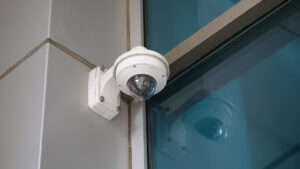
- Dome cameras
- Bullet cameras
- PTZ cameras
- Low-light cameras
- Infrared night-vision cameras
- Wide-angle cameras
- Higher-resolution cameras
- Cameras with intelligent analytics
Resolution is also important, but higher resolution alone does not guarantee better security footage.
Image quality can also depend on:
- Lens selection
- Field of view
- Lighting
- Camera positioning
- Sensor quality
- Night-vision performance
- Compression
- Recording settings
Ask the installer to explain what the camera will actually be able to capture at the required distance.
5. Check Night Vision and Lighting Conditions
A CCTV camera that produces excellent daytime footage may perform very differently at night.
Before selecting cameras, consider whether the property has:
- Poorly lit entrances
- Dark parking areas
- Outdoor walkways
- Warehouses
- Storage areas
- Night-time operations
Ask whether the proposed cameras are suitable for the lighting conditions at each location.
For outdoor cameras, also consider exposure to dust, weather, heat, and other environmental conditions.
The objective is to ensure that important areas remain visible when an incident actually occurs — not just during daylight hours.
6. Understand the Storage and Recording Requirements
Buying cameras is only part of a CCTV system.
You also need enough storage to retain recorded footage for the required period.
Ask your installer:
- How many days of footage will be stored?
- What recording resolution will be used?
- Will cameras record continuously or based on events?
- What type of storage is being provided?
- What happens when storage becomes full?
- Will older footage automatically be overwritten?
- Is backup power available?
- How can recorded footage be retrieved?
Storage requirements can vary significantly depending on the number of cameras, resolution, frame rate, compression settings, and recording schedule.
Do not accept a vague statement such as “the recorder has enough storage.”
Ask for the expected retention period and how it has been calculated.
7. Check the Network and Cabling Infrastructure
Modern IP CCTV systems depend heavily on network infrastructure.
If your CCTV cameras are connected using Ethernet, the installation may require:
- Network switches
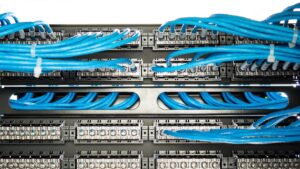
- Structured cabling
- PoE switches
- Network racks
- Patch panels
- Fiber backbone connections for larger sites
The installer should consider whether your existing network infrastructure can support the proposed CCTV system.
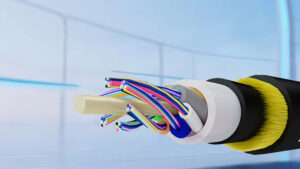
For larger properties, structured cabling and fiber optic networking may be important for connecting cameras across different floors or buildings.
Poor cabling can create problems even when high-quality cameras are installed.
8. Ask About Power and PoE
Many IP CCTV cameras can use Power over Ethernet (PoE), allowing compatible network cables to carry both data and electrical power.
PoE can simplify CCTV installation because one cable can provide both connectivity and power to a compatible camera.
However, the installer should consider the total power requirements of the cameras and whether the network switches can provide sufficient PoE capacity.
It is also worth asking about backup power.
A CCTV system connected to an unprotected power supply may stop recording during an electrical outage.
For important installations, UPS systems and appropriate backup arrangements can help keep critical equipment operating during power interruptions.
9. Ask About Remote Viewing
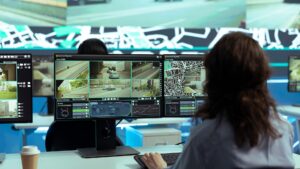
Many modern CCTV systems allow authorized users to view cameras remotely through a computer or mobile application.
If remote access is important to your business, ask:
- How is remote viewing configured?
- Which application is used?
- How are users managed?
- Can access permissions be controlled?
- Is multi-user access supported?
- How is remote access secured?
Remote viewing can be useful for business owners and managers who need to check their property while away from the site.
However, convenience should not come at the expense of cybersecurity. Ask the installer how user accounts, passwords, network access, and system updates are managed.
10. Check Integration With Other Security Systems
A CCTV system does not always need to operate independently.
Depending on your property, it may need to work alongside:
- Access control
- Door access systems
- Intercoms
- PABX systems
- Alarm systems
- Structured cabling
- Other ELV systems
Integration can provide a more complete security solution.
For example, access control logs can potentially be reviewed alongside CCTV footage to help understand who entered a particular area and when.
If you are installing several security systems at the same time, discuss integration requirements before installation rather than treating each system as a completely separate project.
11. Ask About Maintenance and AMC
CCTV systems operate continuously, so installation is not the end of the process.
Cameras can become dirty, storage devices can develop faults, cables can become damaged, and software or firmware may require updates.
Ask whether the CCTV installation company provides an Annual Maintenance Contract (AMC).
A maintenance agreement may cover services such as:
- Camera inspection
- Lens cleaning
- Recording checks
- Storage checks
- NVR/DVR inspection
- Network checks
- Cable inspection
- Firmware updates where appropriate
- System testing
- Fault diagnosis
For commercial properties, regular maintenance can help identify problems before they become serious security gaps.
12. Check Warranty and After-Sales Support
Before signing the agreement, make sure you understand the warranty.
Ask whether the warranty covers:
- Cameras
- NVR/DVR
- Hard drives
- Network switches
- Power equipment
- Installation workmanship
Also ask what happens if a camera stops working.
Find out:
- Who should you contact?
- What is the expected response time?
- Is emergency support available?
- Are replacement parts available locally?
- Is labour covered under warranty?
A CCTV system can remain installed for years, so after-sales support matters almost as much as the initial installation.
13. Compare the Complete Solution, Not Just the Price
The cheapest CCTV quotation is not necessarily the best value.
Two companies may quote similar numbers of cameras but provide completely different systems.
One quotation may include:
- Better cameras
- Larger storage
- Better network equipment
- Proper cabling
- UPS backup
- Professional installation
- Testing
- Documentation
- Warranty
- Maintenance
Another quotation may simply provide cameras and a recorder.
When comparing CCTV installation companies in Qatar, compare the complete specification and service, not just the total price.
14. Ask for a Clear CCTV System Proposal
A professional proposal should make it easy for you to understand what you are purchasing.
Ideally, the quotation should clearly identify:
- Camera quantity
- Camera models or specifications
- Resolution
- Lens type
- NVR/DVR specification
- Storage capacity
- Network switches
- PoE requirements
- Cabling
- Installation
- Configuration
- Testing
- Warranty
- Maintenance options
If the quotation simply says “CCTV package – 16 cameras” without explaining the equipment, ask for more information before making a decision.
Red Flags to Watch For
Be cautious if a CCTV installation company:
- Gives a quotation without properly assessing the property
- Cannot clearly explain applicable MOI requirements
- Avoids specifying camera models or specifications
- Does not explain storage capacity or retention
- Offers no clear warranty
- Has no maintenance or support plan
- Cannot explain where cameras will be positioned
- Focuses entirely on price
- Uses unclear or incomplete quotations
- Pressures you to make a quick decision
A professional installer should be comfortable answering technical and practical questions before you commit.
Need a CCTV Installation Company in Qatar?
Planning a CCTV system for an office, warehouse, retail shop, villa, or commercial property?
You can use the checklist above when comparing CCTV installation companies. If you need help with site assessment, camera selection, network infrastructure, applicable MOI requirements, installation, testing, or ongoing maintenance, WeFour can help.
WeFour provides CCTV installation, structured cabling, access control, and other ELV solutions for businesses and properties across Qatar.
Contact WeFour
📍 Office No. 5, Bank Street, West Bay, Doha, Qatar
📞 +974 3146 4818 / +974 3013 6314
✉️ info@wefourconnect.com
🌐 wefourconnect.com
Reach out by phone, email, or through the website to discuss your CCTV requirements and arrange a professional site survey.
Frequently Asked Questions
Choose a company with relevant experience, proper approvals, quality equipment, professional installation, and reliable after-sales support. Compare the complete solution rather than choosing based only on price.
CCTV installations may need to comply with Qatar’s security requirements and applicable MOI regulations. Choose an experienced installer who can guide you through the required approval and compliance process.