
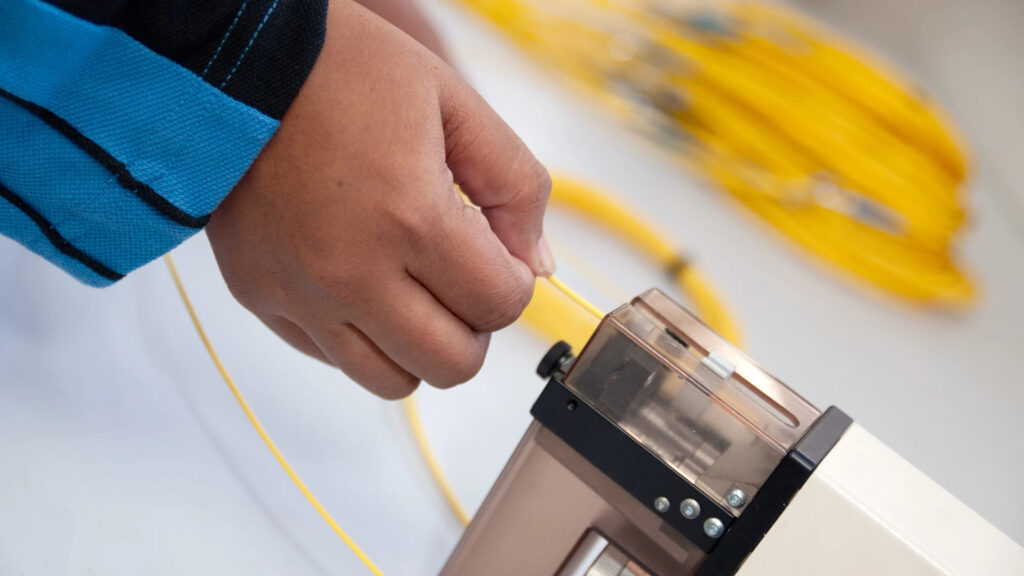
As businesses continue to invest in faster and more reliable network infrastructure, one of the most common questions is: “How much does Fiber Optic Installation Cost in Qatar?“
The cost of Fiber Optic Installation in Qatar can vary significantly depending on several factors, including the size of the project, cable routing requirements, network design, fiber type, and installation complexity. Every business has unique connectivity needs, which is why fiber optic projects are typically customized rather than offered at a fixed price.
Whether you’re connecting a small office, upgrading a commercial facility, or building a large-scale enterprise network, understanding the key cost factors can help you plan your investment more effectively.
What Is Included in Fiber Optic Installation?
Professional Fiber Optic Installation in Qatar involves much more than simply running cables through a building. A complete fiber optic project generally includes:
- Site survey and consultation
- Network design and planning
- Fiber optic cable installation
- Cable routing and containment
- Fiber splicing and termination
- Patch panels and connectivity hardware
- Network cabinet integration
- Testing and certification
- Documentation and labeling
- Ongoing maintenance and support
The scope of these services can influence the final project cost.
Factors That Affect Fiber Optic Installation Costs in Qatar
Project Size
The size of the facility plays a major role in determining installation costs.
A small office may require only a limited amount of cabling, while large facilities such as hospitals, hotels, warehouses, industrial plants, universities, and commercial buildings often require extensive fiber optic infrastructure.
Larger projects typically involve:
- Longer cable runs
- More network points
- Additional labor
- Advanced testing requirements
- Larger equipment installations
As project size increases, installation costs generally increase as well.
Type of Fiber Optic Cable
Different fiber optic cables are designed for different applications.
Single-Mode Fiber
Single-mode fiber is commonly used for long-distance communication and large enterprise networks. It provides excellent performance over extended distances.
Multi-Mode Fiber
Multi-mode fiber is typically used for shorter-distance communication within buildings and campuses. It offers a cost-effective solution for many business environments.
The type of fiber selected can impact overall project costs.
Installation Complexity
Not all buildings are equally easy to install.
Factors that can increase installation complexity include:
- Multi-story buildings
- Existing infrastructure limitations
- Difficult cable pathways
- Underground routing requirements
- Industrial environments
- Restricted access areas
More complex installations require additional planning, labor, and equipment.
Fiber Splicing and Termination
Fiber optic systems require specialized splicing and termination processes to ensure reliable performance.
Professional fiber splicing involves:
- Precision fusion splicing
- Connector termination
- Signal testing
- Quality verification
Projects with a larger number of fiber connections may require additional time and resources.
Network Equipment Requirements
A complete fiber optic network may include:
- Patch panels
- Fiber distribution units
- Network switches
- Media converters
- Server room infrastructure
- Network cabinets
The amount and type of equipment required can significantly influence project costs.
Testing and Certification
Professional Fiber Optic Installation in Qatar should always include testing and certification.
Testing helps verify:
- Signal quality
- Transmission performance
- Cable integrity
- Network reliability
Advanced testing equipment ensures the network performs according to industry standards and client requirements.
Why Businesses Invest in Fiber Optic Installation in Qatar
Although fiber optic infrastructure may require a larger initial investment compared to traditional cabling, it provides significant long-term benefits.
Faster Network Speeds
Fiber optic networks support high-speed communication for modern business applications.
Higher Bandwidth
Businesses can handle increasing amounts of data without performance issues.
Improved Reliability
Fiber optic cables are resistant to electromagnetic interference and signal degradation.
Better Security
Data transmitted through fiber networks is more secure than many traditional communication methods.
Future Scalability
Fiber infrastructure can support future technologies and increasing bandwidth demands.
Reduced Downtime
Reliable network performance helps minimize business interruptions and productivity losses.
Fiber Optic Installation in Qatar for Every Industry
Corporate Offices
Businesses rely on fiber optic networks for cloud applications, communication systems, remote work environments, and high-speed internet connectivity.
Educational Institutions
Schools, colleges, and universities use fiber networks to support digital learning platforms, campus-wide connectivity, and administrative systems.
Healthcare Facilities
Hospitals and clinics require secure, high-performance networks to support patient management systems, medical devices, and communication infrastructure.
Hotels & Hospitality
Fiber optic networks provide reliable internet access for guests while supporting operational systems and communication platforms.
Retail Stores & Shopping Centers
Retail businesses depend on fast connectivity for payment systems, inventory management, surveillance networks, and customer service operations.
Industrial Facilities
Manufacturing plants and industrial environments require robust network infrastructure to support automation systems, monitoring platforms, and operational technologies.
Data Centers
Data centers require high-capacity fiber optic infrastructure capable of handling large volumes of data traffic with maximum efficiency.
How to Get an Accurate Fiber Optic Installation Cost Estimate
Because every project is different, the most accurate way to determine the cost of Fiber Optic Installation in Qatar is through a professional site survey.
During the assessment, specialists evaluate:
- Building size
- Connectivity requirements
- Cable routing pathways
- Existing infrastructure
- Equipment requirements
- Future expansion plans
- Network performance objectives
This allows businesses to receive a customized solution and quotation tailored to their exact requirements.
Conclusion
The cost of Fiber Optic Installation in Qatar depends on factors such as project size, cable type, installation complexity, network equipment, testing requirements, and future scalability needs. While costs vary from one project to another, fiber optic infrastructure remains one of the most valuable long-term investments for businesses seeking faster connectivity, improved reliability, and future-ready network performance.
By investing in professional fiber optic installation, organizations can create a strong foundation that supports growth, productivity, communication, and technological advancement for years to come.
Contact WeFour Connect
Looking for a professional Fiber Optic Installation in Qatar?
WeFour Connect delivers reliable fiber optic solutions for offices, commercial buildings, warehouses, hospitals, educational institutions, hotels, industrial facilities, and data centers across Qatar.
📍 Doha, Qatar
📞 +974 3146 4818 | +974 3146 4718
📧 info@wefourconnect.com